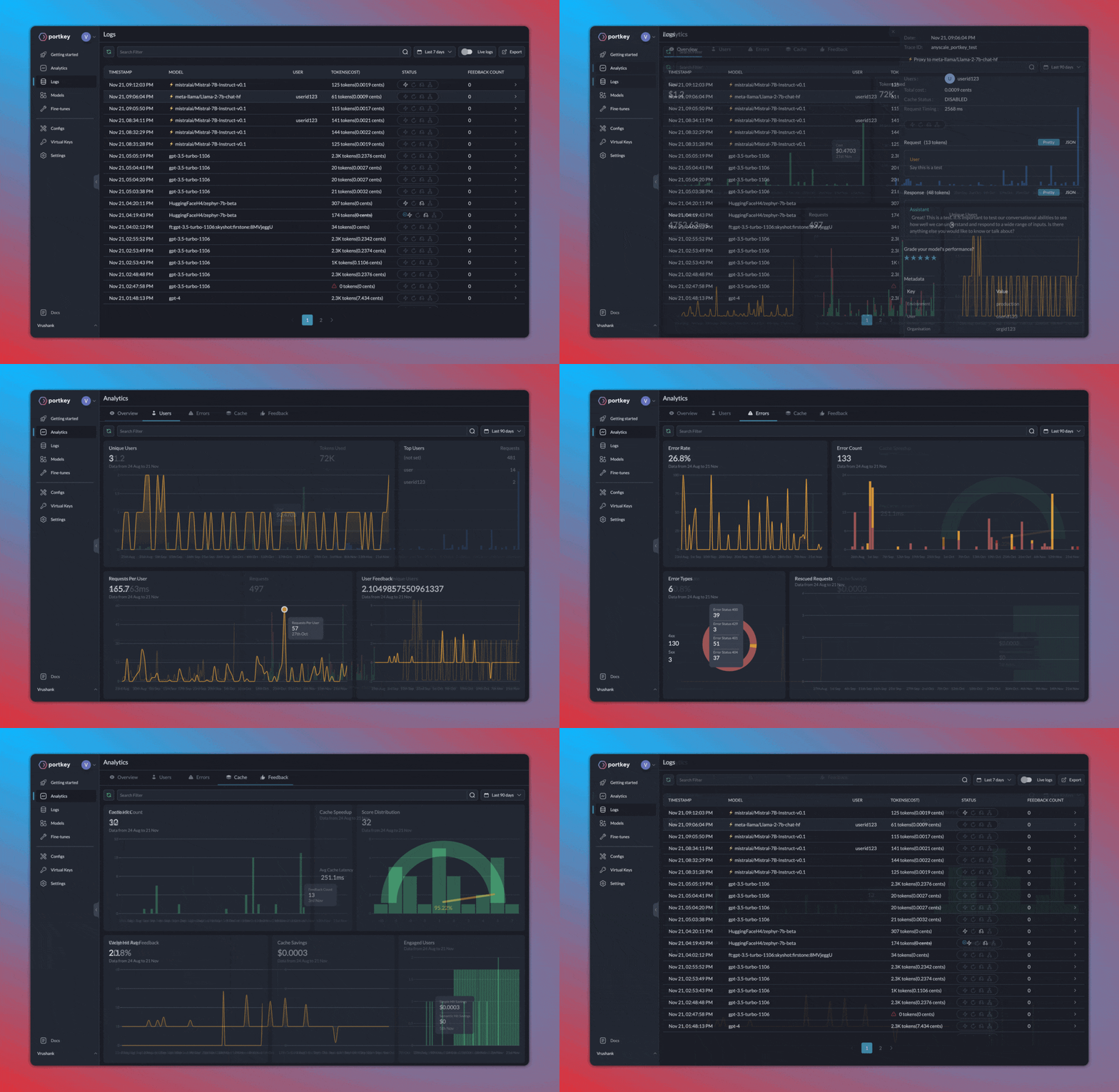
Use the Mistral API through Portkey for:
  1. Enhanced Logging: Track API usage with detailed insights and custom segmentation.
  2. Production Reliability: Automated fallbacks, load balancing, retries, time outs, and caching.
  3. Continuous Improvement: Collect and apply user feedback.

1.1 Setup & Logging

  1. Obtain your Portkey API Key.
  2. Set $ export PORTKEY_API_KEY=PORTKEY_API_KEY
  3. Set $ export MISTRAL_API_KEY=MISTRAL_API_KEY
  4. pip install portkey-ai or npm i portkey-ai

1.2. Enhanced Observability

  • Trace requests with single id.
  • Append custom tags for request segmenting & in-depth analysis.
Just add their relevant headers to your request:
Here’s how your logs will appear on your Portkey dashboard:

2. Caching, Fallbacks, Load Balancing

  • Fallbacks: Ensure your application remains functional even if a primary service fails.
  • Load Balancing: Efficiently distribute incoming requests among multiple models.
  • Semantic Caching: Reduce costs and latency by intelligently caching results.
Toggle these features by saving Configs (from the Portkey dashboard > Configs tab). If we want to enable semantic caching + fallback from Mistral-Medium to Mistral-Tiny, your Portkey config would look like this:
Now, just set the Config ID while instantiating Portkey:
For more on Configs and other gateway feature like Load Balancing, check out the docs.

3. Collect Feedback

Gather weighted feedback from users and improve your app:

Conclusion

Integrating Portkey with Mistral helps you build resilient LLM apps from the get-go. With features like semantic caching, observability, load balancing, feedback, and fallbacks, you can ensure optimal performance and continuous improvement. Read full Portkey docs here. | Reach out to the Portkey team.

Last modified on April 8, 2026